
Power Struggle
Porto goes dark

It’s noon on April 28th and Porto is powerless. I need an espresso but the kiosks are only selling bottled drinks and soon-to-melt ice cream, a hot commodity. Other stores are either closed or cash-only.
A restaurant owner shakes his head forlornly, packing up his outdoor seating. The pharmacist starts an IOU system. A neighbor starts grilling with charcoal on his roof, possibly all day. The smoke fills the house.
I feel the most mystified when I see a buff, bald man using a generator for a chain saw; restoration of a mini golf course supersedes the need for sustenance, I suppose.
Another neighbor, a Georgian, is entering our building when she sees me. She tells me she’ll be using charcoal to grill her soon-to-expire fish. “We’ve got tons,” she says. She thinks the outage will last 72 hours — or at least that’s what someone told her. I wonder what her source is but she waves me away when her child begins to cry, then leaves her stroller by the side of the stairs; inside, a squealing toy provides the neighborhood’s only electronic noise.
Grindr is down, too, and I imagine gays meeting clandestinely in parks. Then I remember that Portugal is a fairly conservative country and there’s not much cruising to be had outside of Lisbon.
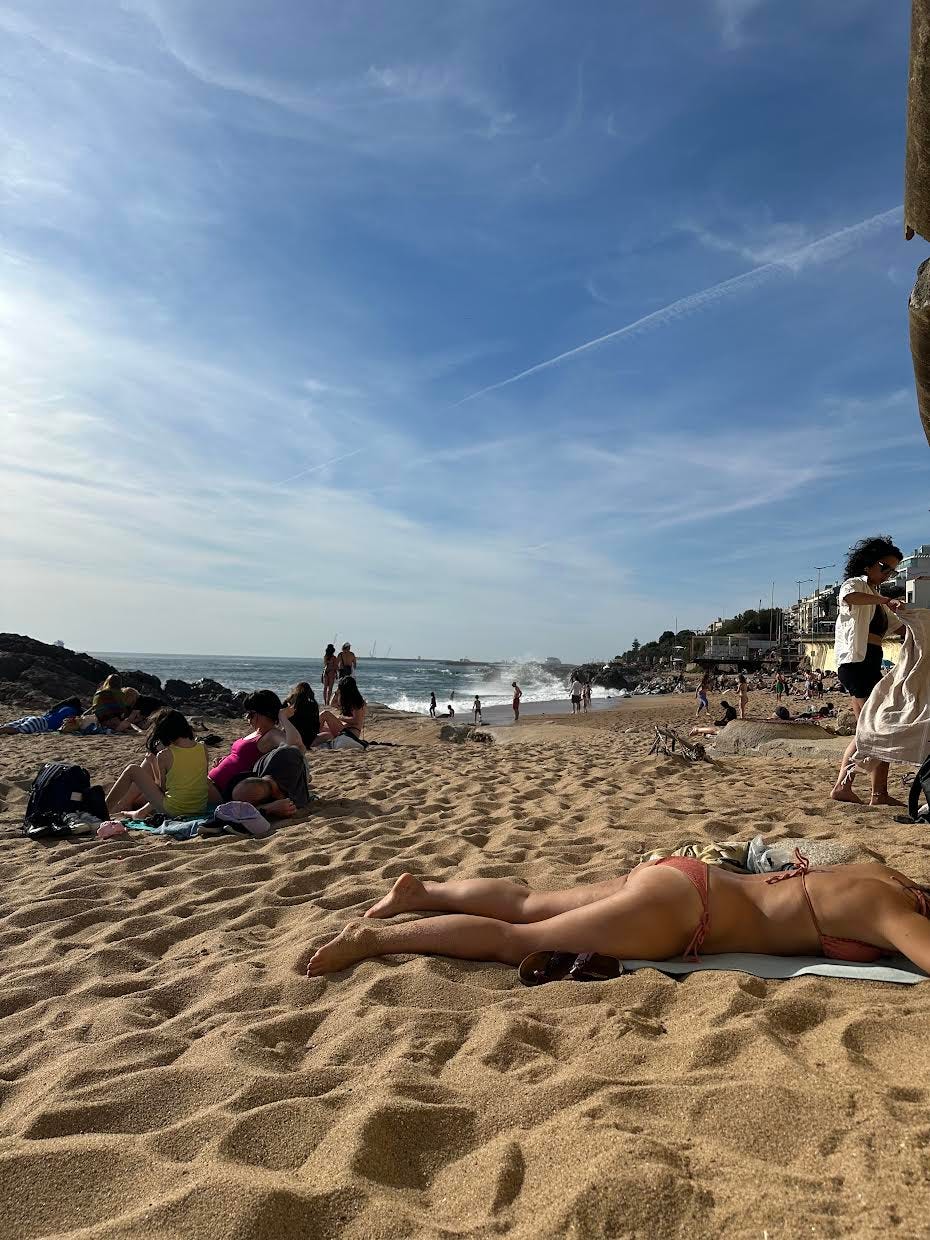
Still, the vibe is shockingly pleasant. Cars aren’t honking. Drivers aren’t yelling. The beaches are filled with sunbathers. Books are suddenly everywhere —or maybe I hadn’t noticed them before.
The Internet lasts longer than the power. We have about an hour to talk about the power being out, and to wonder what will happen next.
The 404 page makes me feel a sort of freedom. Maybe I’ll finally work on my novel. Maybe I’ll finally relax. But I end up worrying instead. My friend is flying in from Berlin and I have no way of knowing if her flight was cancelled.
Around 6:30pm, I realize I can steal Internet from a nearby hotel running a generator. I learn that my friend, miraculously, is here, but I still can’t reach her because her phone is useless.
Then parts of the Internet are restored and she’s able to call me. She’s at a nearby pharmacy, wondering where to go. I run to her, and when we see each other, we scream. She’s had a day: the line from the airport to the bus took about three hours or so; she can’t remember exactly how long because she was in a sort of fugue state. She’s made friends with a fellow traveler — a Gen Z resident of Paris named Victoria. We discuss visiting Victoria at her hostel in downtown Porto.
We walk back to the apartment in the pitch black. Car alarms are blaring. An old man is using his phone as a flashlight. He tries to say something to me in Portuguese, but I have no idea what he’s saying.
At 9:33pm, the power is restored to our neighborhood. Our neighbors cheer. The fridge sputters to life. We eye the frozen fish in our freezer: still good.